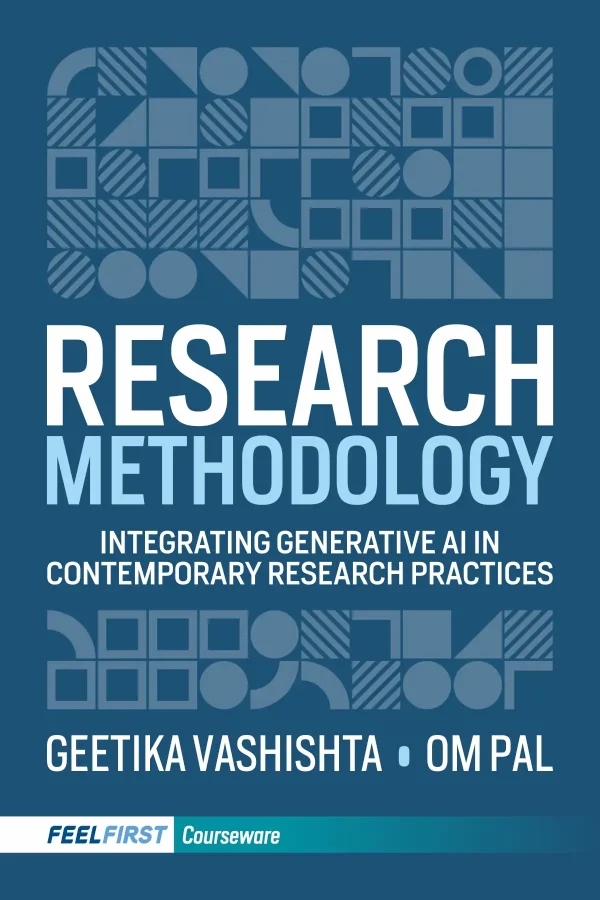
Research Methodology
integrating generative AI in contemporary research practices
What makes research credible, rigorous, and relevant in today’s rapidly evolving scientific landscape?
Choose your option:
Master the Art and Science of Research—From First Question to Final Report
What makes research credible, rigorous, and relevant in today’s rapidly evolving scientific landscape? Research Methodology: Integrating Generative AI in Contemporary Research Practices offers a comprehensive yet accessible guide for students, researchers, and professionals seeking clarity and confidence in conducting research.
Spanning foundational theories to emerging trends such as generative AI, open science, and citizen-led research, this book walks readers through every stage of the research process—from identifying meaningful problems and designing robust studies to analysing data and communicating findings ethically. It also explores research in the digital age, addressing algorithmic experimentation, dataset ethics, and responsible innovation.
Designed with undergraduate learners in mind and aligned with the National Education Policy (NEP) 2020, the book follows a pedagogical approach that encourages critical thinking and inquiry-based learning. Clear learning objectives, examples, and reflective exercises help readers connect theory with practice, while a “How to Navigate This Book” roadmap guides learners through its structure.
- Introduction: Research in the Era of Generative AI Tools
- Introduction to GenAI and LLMs
- Using AI Tools for Research Assistance
- Harnessing GenAI for Research Workflows
- Ethical Use of GenAI
- AI-Assisted Literature Review and Thematic Synthesis
- Synthetic Data Generation for Simulation and Testing
- Writing Code Using AI
- Evaluating AI-Generated Content
- Limitations of Using AI in Research
- Part I: Research Foundations
- Understanding Research
- Introduction: The Spirit of Inquiry
- What is Research?
- Significance of Research in Society
- Characteristics of a Good Research
- Emerging Research Tools and Ecosystems
- Classifications and Types of Research
- Basic vs. Applied Research
- Analytical and Conceptual Research
- Empirical Research: Experimental and Non-experimental
- Exploratory and Descriptive Research
- Prospective vs. Retrospective Research
- Quantitative, Qualitative, and Mixed Methods
- Interdisciplinary and Transdisciplinary Research
- Research Methodologies Across Academic Departments
- The Research Process
- Overview of the Research Lifecycle
- Formulating Research Questions and Objectives
- Hypothesis Formulation
- Inductive and Deductive Approaches
- Research Strategy and Planning
- Iteration and Adaptation in Research
- GenAI in Formulating Research Questions
- Part II: Identifying and Defining Problems
- Research Problem Identification
- Identifying Broad Research Areas
- Narrowing Down to a Specific Problem
- Relevance and Feasibility of a Research Problem
- Innovation vs. Incremental Research
- Common Pitfalls in Problem Selection
- GenAI for Formulating Research Questions
- Conducting a Literature Review
- Importance of Literature Survey
- Sources: Journals, Databases, Repositories
- Search Techniques: Keywords, Boolean Operators, Filters
- Organizing and Summarizing Literature
- Annotated Bibliography and Synthesis
- Identifying Gaps and Research Opportunities
- Writing a State-of-the-Art Review
- Using AI tools for Writing a Literature Review
- PART III: DESIGNING AND EXECUTING RESEARCH
- Research Design and Methodologies
- Defining Research Design
- Significance of Research Design
- Features of a Good Research Design
- Different Research Designs
- Experimental Design (Algorithm Testing, Simulations)
- Trade-off Between Internal and External Validity
- Case Studies and Comparative Analysis
- Working with Data and Datasets
- Role of Data in Research
- Types of Data
- Data Collection Strategies
- Identifying and Accessing Open Datasets
- Data Pre-processing and Cleaning Techniques
- Ethical and Legal Aspects of Using Data
- Exploratory Data Analysis
- Tools for Data Handling
- Data Visualization Techniques and Tools
- PART IV: ANALYSIS, REPORTING, AND DISSEMINATION
- Analysis and Interpretation of Results
- Quantitative Analysis Techniques
- Statistical Testing and Validity
- Qualitative Analysis: Coding and Theming
- Use of Data Analysis Tools
- Presenting Results Effectively
- Interpreting Findings in Context
- Drawing Conclusions and Recommendations
- Statistical Tools and Tests in Research Methodology
- Role of Statistics in Research
- Types of Statistical Techniques
- Scales of Measurement
- Descriptive Statistical Tools
- Probability and Probability Distributions
- Hypothesis Testing
- Parametric Tests
- Non-Parametric Tests
- Correlation and Regression
- Sampling Fundamentals
- Advanced Statistical Techniques
- Statistical Software and Tools
- Ethical Use and Interpretation of Statistics
- Writing the Research Report
- Understanding the Structure of a Research Paper: IMRaD and Beyond
- Writing Style and Academic Language
- Common Mistakes in Research Writing
- Use of Templates and Style Guides
- Components of a Research Paper Across Disciplines
- Referencing and Avoiding Plagiarism
- Importance of Proper Referencing
- Citation Styles: IEEE, APA, MLA, Chicago
- Using Citation Managers
- Understanding and Avoiding Plagiarism
- Paraphrasing and Quoting Appropriately
- PART V: PRESENTATION, PUBLICATION, AND ETHICS
- Presenting Research Work
- Oral Presentations and Public Speaking
- Poster Presentations
- Preparing Slide Decks for Conferences
- Tips for Effective Technical Communication
- Publication and Peer Review Process
- Understanding Journals and Conferences
- Understanding Citation Metrics
- Selecting the Right Publication Venue
- The Peer Review Process
- Revising Manuscripts Based on Feedback
- Open Access Publishing and Preprints
- Ethics in Research
- Importance of Ethics in Research
- Common Ethical Dilemmas in Research
- Protection from Harm
- Voluntary and Informed Participation
- Right to Privacy and Confidentiality
- Conflict of Interest
- Honesty with Professional Colleagues
- Professional Codes of Ethics
- Intellectual Property Rights (IPR)
- Plagiarism and AI Generative Text Checker Tools
- Fraud and Misconduct in Science
- Role of Ethics Committees Across Departments
- Academic Integrity Guidelines and Initiatives
- PART VI: PRACTICAL ENGAGEMENT AND CAPSTONE
- Research Project Planning and Execution
- Planning and Scheduling a Research Project
- Time and Resource Management
- Collaboration and Team Research
- Maintaining a Research Diary or Logbook
- Final Presentation and Viva Preparation
- PART VII: NEW DIRECTIONS IN RESEARCH METHODOLOGY
- Research Communication and Public Outreach
- Introduction to Research Communication
- Audiences Beyond Academia
- Formats of Research Communication
- Tools for Research Communication
- Using GenAI in Communication
- Communicating Research Ethically
- Grant Writing and Research Proposal Development
- Introduction to Research Grants
- Anatomy of a Grant Proposal
- Finding the Right Grant Opportunity
- Drafting Proposals with GenAI
- Evaluating and Submitting a Proposal
- Responsible and Explainable AI in Research
- Concepts of Responsible AI
- Ethical Risks in AI Design and Deployment
- Explainability Techniques
- Bias Detection and Mitigation in AI
- Design of Ethical AI Experiments
- Ethical Responsibilities in AI Research
- Some Use Cases of Responsible AI
- Open Science and Reproducibility in Research
- The Open Science Movement: Philosophy and Goals
- Reproducible Research in Computer Science
- Tools for Open Research
- FAIR Principles
- Open Data and Open-Source Code Licensing
- Reproducibility Challenges and Best Practices
- Public Sharing and Reuse of Research
- Citizen Science and Crowdsourced Research
- Citizen Science and Public Engagement
- Models of Crowdsourcing in Research
- Designing Participatory Research Projects
- Tools for Crowdsourced Data Collection
- Data Quality in Non-Expert Contributions
- Ethical Considerations in Crowdsourced Research
- Appendices
The following resources are available to help instructors in using this text in their classroom.
Lecture Slides
Introduction (Lecture Slides | pptx) Download
PPT of the Introduction for instructorsChapter 1 (Lecture Slides | pptx) Download
PPT of Chapter 1 for instructorsChapter 2 (Lecture Slides | pptx) Download
PPT of Chapter 2 for instructorsChapter 3 (Lecture Slides | pptx) Download
PPT of Chapter 3 for instructorsChapter 4 (Lecture Slides | pptx) Download
PPT of Chapter 4 for instructorsChapter 5 (Lecture Slides | pptx) Download
PPT of Chapter 5 for instructorsChapter 6 (Lecture Slides | pptx) Download
PPT of Chapter 6 for instructorsChapter 7 (Lecture Slides | pptx) Download
PPT of Chapter 7 for instructorsChapter 8 (Lecture Slides | pptx) Download
PPT of Chapter 8 for instructorsChapter 9 (Lecture Slides | pptx) Download
PPT of Chapter 9 for instructorsChapter 10 (Lecture Slides | pptx) Download
PPT of Chapter 10 for instructorsChapter 11 (Lecture Slides | pptx) Download
PPT of Chapter 11 for instructorsChapter 12 (Lecture Slides | pptx) Download
PPT of Chapter 12 for instructorsChapter 13 (Lecture Slides | pptx) Download
PPT of Chapter 13 for instructorsChapter 14 (Lecture Slides | pptx) Download
PPT of Chapter 14 for instructorsChapter 15 (Lecture Slides | pptx) Download
PPT of Chapter 15 for instructorsChapter 16 (Lecture Slides | pptx) Download
PPT of Chapter 16 for instructorsChapter 17 (Lecture Slides | pptx) Download
PPT of Chapter 17 for instructorsChapter 18 (Lecture Slides | pptx) Download
PPT of Chapter 18 for instructorsChapter 19 (Lecture Slides | pptx) Download
PPT of Chapter 19 for instructorsChapter 20 (Lecture Slides | pptx) Download
PPT of Chapter 20 for instructorsSolutions Manual
RM_Solutions Manual (Solutions Manual | docx) Download
Solutions Manual for the exercises presented in the textbook